For Greater Manchester’s pubs, restaurants and bars, next Wednesday is make or break. On October 28, Chancellor John Healey will deliver his first Autumn Budget in Parliament – the hospitality industry will be watching closely.
The sector is the UK’s third largest employer, supporting roughly 3.5 million jobs and accounting for about 10 percent of total UK employment. The sector is also a major employer of young people, representing a significant share of youth and entry-level work.
But hospitality is on its knees. Rising costs, global instability and unanswered pleas for help around sky-high taxes have left those working in hospitality feeling jaded, with some questioning whether it’s time to throw the towel in.
Click here for the latest on Manchester’s food & drink scene, gigs and more in our CityLife newsletter
Earlier this month, British Beer & Pub Association figures showed 295 pubs closed permanently in the first nine months of this year with 360 closures forecast by the end of the year. Meanwhile, the sector’s trade body, UKHospitality says the industry has faced more than £5 billion in additional costs over the past two years, and its budget campaign says nearly 100,000 hospitality jobs have gone over the same period, with young people and part-time workers hit hardest.
Allen Simpson, the chief executive of UKHospitality has called the staggering number of job losses “an absolutely unprecedented attack” on the sector. Ahead of next week’s statement, he and the trade body are calling for a VAT cut in line with Europe to 10 percent; a solution to business rates; changes to the National Insurance Contributions (NICs) by employers and a rollback on the tourist tax.
Just this week, the trade body and a group of under-30s working the sector urged the Government to back the sector to create jobs and help solve the NEETs crisis (young people Not in Education, Employment, or Training), and provide the career and development opportunities they themselves have benefitted from.
It’s an aspect of the hospitality crisis that has come up time and time again with landlords, restaurateurs and business owners in the sector that we’ve spoken to. Ahead of the budget, we spoke to a variety of people from across the industry about the current challenges, what support they need, and their hopes for the industry in which they have paved their careers and lives.
“Costs continue to go up, they don’t stop”
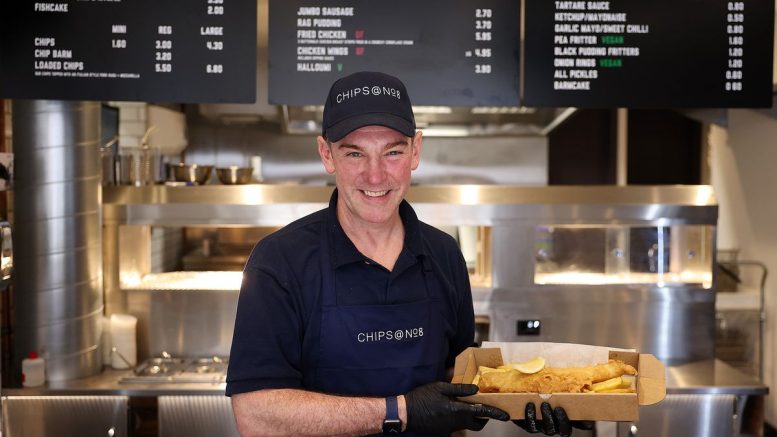
Dan Edwards has worked in some of Manchester’s best hotels, he’s also the man behind the beloved Chips No.8 in Prestwich. The chippy on Clifton Road has become a go-to for hungry, chippy tea-loving Mancunians for almost a decade now, but Dan tells me that costs are going up “across the board”, with the war in Iran driving up diesel costs and forcing his suppliers prices up to.
“Fish in particular has gone up because fishing uses boats and a lot of diesel. It’s already risen significantly and there seems to be no let up, says Dan. “Although potatoes are reasonable at the moment, we know they will go through the roof due to a long, dry summer and getting hold of quality produce is going to push our costs up – it will take us to the brink.”
The impact of the war and cost-of-living crisis creates a vicious cycle too, with consumers having to reduce their own spending, and businesses like Dan’s having to constantly think of new ideas and offers to get people into the shop.
“People at home have less money so they are more choosey, so you have to scrap to get people through the door, but putting prices up is not possible. People are looking for value for money, but that means no profit for us.
“All I’m looking for is to be able to look after my family, pay the mortgage and ideally take them on holiday once a year, but it’s almost impossible to earn a wage. It’s unrelenting and horrific, business on the high street is extremely tough.”
A big change Dan has made to alleviate some of the pressure is the type of fish they use. But doing so is a gamble.
He explains: “We’ve always served haddock as our primary fish, but the prices of those are ridiculous, so we’ve been trying to introduce new fish, coley. We do it on a deal as it’s cheaper, but now unsurprisingly, coley prices are on the rise.
“Three weeks ago, there was a freak price, so it cost 80 percent more than 3 weeks ago. We did £2 off but we sold out. It allows people to have that treat, but means our profit margins are next to nothing, so we have to be extremely busy to make anything at all.”
Ciaran Keaney, landlord and owner of The Angel Pub and Carringtons Wines, is feeling the impact of price rises too. “I’ve been in the business for 40 years, and particularly over the past 20 years, I’ve seen the industry come under increasing pressure,” he notes.
“Rising costs and the challenges of running a hospitality business have had a significant impact, making it harder for venues to remain viable while continuing to offer customers good value.
“Without meaningful support, we risk losing even more hospitality venues at a time when the cost of living is already making it harder for people to go out. Businesses need to be able to keep prices affordable to attract customers, but there is only so far they can go without putting their own profitability at risk.”
“We find wages are out of hand”
The UK government’s National Living Wage (NLW) rose to £12.71 per hour (for workers aged 21 and over) in April 2026, while the voluntary Real Living Wage increased to £14.10 per hour across the UK. While this is a positive step for workers, and is supported by businesses, it has added an estimated £1.4 billion in labor costs across the UK hospitality sector.
Employer National Insurance Contributions (NICs) increased in April too. The employer rate rose by 1.2 percentage points, from 13.8 percent to 15 percent.
Because hospitality is labor-intensive – with a high reliance on young workers and hourly staff – the wage hikes directly squeeze already tight operating profit. To manage wage expenses, many operators have cut staff hours, reduced trading days, or slowed down recruitment for entry-level workers.
The wage increases also coincided with other rising overheads, including higher employer National Insurance contributions (NICs), elevated food and energy costs, and business rate changes. For those running venues in Greater Manchester, it’s not that they don’t want to pay more, it’s just hard to find the extra cash.
“We find wages are out of hand, even going back to 5 or 6 years. Now we’re at £12 to 13 for minimum wage before you even start with everything else,” says Rick Scholes, the Managing Director of the beloved Grandpa Greene’s, the ice cream maker and café business with sites in Diggle and Uppermill.
“At Diggle, on key trading days we have more than 20 staff on, and that adds up to such huge numbers. People need opportunities, and businesses need less financial pressure to create those opportunities for young people.
“We’ve always employed young people, and we take pride in that – watching them grow and leaving with confidence – but because of the sector now, wage increases is making it difficult. People are avoiding employing younger people.”
Matt Nellany, one half of the hospitality duo behind open-fire restaurant Stow, and historic Northern Quarter pub and restaurant The Trof, agrees. “We all want to pay our teams the best we can and fairly, but as it rises that impacts significantly on this industry because it is so people-focused.
“Bigger chains are going down a more QR code or order-at-the-bar route, so they can save on service, but what you lose is strong hospitality – there is no hospitality without people. 18-year-olds are losing out because it’s more cost-effective to hire someone older with experience instead of risk of training someone – it means they’re missing out.”
Luke Payne, chef and owner of The Pack Horse Hayfield and Almanac, holds the same view. The increases in National Insurance introduced in previous budgets have had a significant impact on the sector,” he adds.
“For many businesses, employer NICs have increased by thousands of pounds, putting further pressure on already stretched budgets and making it increasingly difficult to recruit, retain and properly staff their businesses.”
“There’s a clear message: VAT needs to be brought into line with the continent”
A #VATsTheProblem petition spearheaded by UKHospitality and led by chef Tom Kerridge was launched this year. It’s calling for a cut from 20 percent to 10 percent, with more than 400,000 signatures, and has been delivered to Downing Street.
Mark Wrigley, the co-owner of Atlas Bar, says that’s a clear message to the government from the sector, and would provide immediate help if lowered to the same range as the rest of the continent. “I’ve just paid £51,000 in VAT a few weeks ago, that’s a massive amounts of money. Along with NICs which is £60,000 a year just to employ people, we’re just going in a downward spiral, and being taxed to death.”
Luke from The Pack Horse believes it could make a huge difference too. “We urgently need VAT relief to help hospitality businesses survive,” he says. “I run two businesses and am still unable to take a regular wage myself.
“I have no pension provision and am putting everything I have at risk to keep the businesses going. A reduction in VAT would ease some of the significant tax pressure on the sector, giving businesses a better chance of becoming financially sustainable and securing their long-term future.”
Matt, from The Trof, says the campaign has drawn great attention to the matter too. “I don’t think that should downplay the work that’s been done by #VATsTheProblem – they’ve made a lot of noise. I think my pessimistic view is we won’t see it, too big of an ask, but my optimistic side says we may see it in the future. They’ve got to budget, but they are thinking about it and it could come in.”
Ryan McDermott, who along with his wife Megan, took over the reins of the Ape & Apple pub, on John Dalton Street in the city centre earlier this year says VAT is “a killer”. “We’re talking about aligning ourselves with the rest of Europe where it’s closer to 10 percent, but are currently in the same bracket as some of the big companies.
“Hospitality is a first point of entry and we can’t create those jobs because there’s so much money going out. You are working harder than ever in your life to survive, and it feels a bit unfair when they could change that.
“We’re all just shattered with it. We live and breathe this. We want to do this, we want people to come to our events, eat our food and buy our drinks but we’re tired of the letters dropping through the postbox and the emails. We could fix this easily.”
On whether he thinks Andy Burnham has listened to the calls the lower VAT and the voices leading the charge in the hospitality sector, Ryan adds: “I’m just hoping they’ve listened, if they have it will be amazing, but if not, people will hold on for Christmas for that cash, but the shutters coming down from January to March will be faster than we’ve ever seen – I can’t see how anyone can stay open without that help.”
Dan at Chips No.8 echoes this. “I feel that he’s going to do something because he has to, he needs to make a statement. If they they cut VAT and bring it in line with Europe, then I think things will be a lot more positive. I’m just hoping for a bit of Northern compassion.”